
Home Care's Biggest Staffing Problem Isn't Hiring—It's Coordination
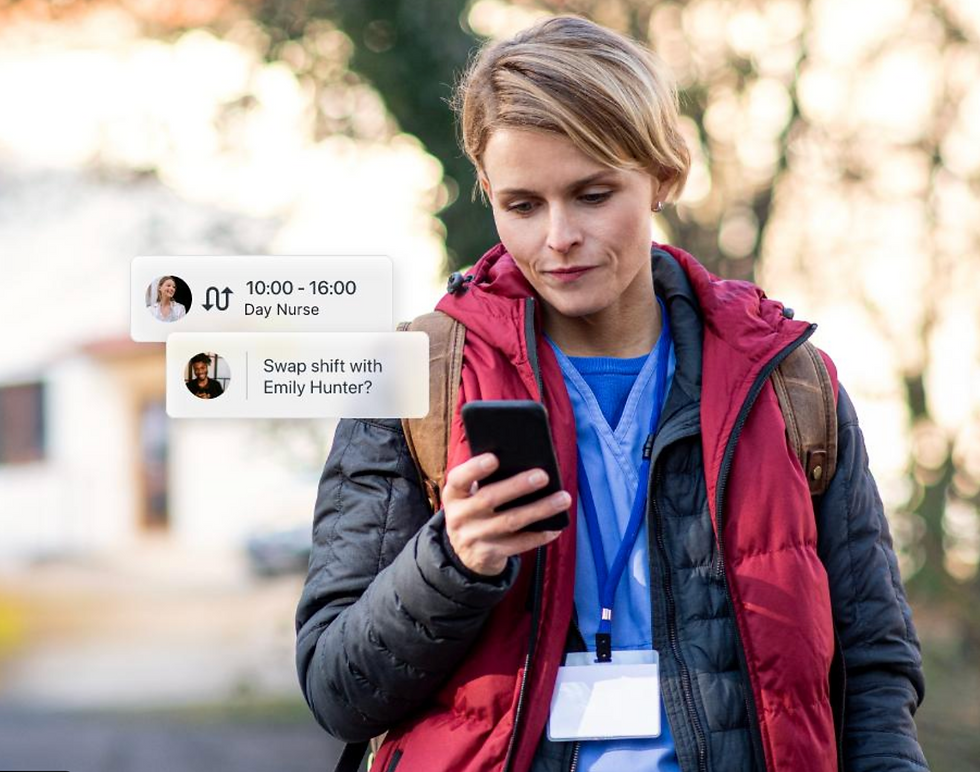
I hear it all the time from home care agency owners:
“We need more caregivers.”
But sometimes, that's not actually the problem.
You may have qualified caregivers available. You may have a strong recruiting pipeline.
You may even have people sitting on your roster who are willing to pick up additional shifts.
Yet you're still dealing with open shifts, last-minute call-offs, overtime, frustrated coordinators, unhappy families, and missed opportunities.
So what is happening?
The problem may not be that you don't have enough caregivers. The problem may be that you can't coordinate the caregivers you already have fast enough.
In home care, having the right people available means very little if the right information doesn't reach the right person at the right time.
And that's where communication becomes a staffing strategy.
The Caregiver May Be Available. But Does Anyone Know?
Let's imagine a caregiver calls at 7:30 p.m.
They can't make tomorrow morning's shift.
The client needs coverage.
The coordinator needs to find a replacement.
Another caregiver might actually be available.
But how quickly can the agency identify that person?
Who gets notified?
Who follows up?
Who confirms the replacement?
Who informs the family?
Who updates the schedule?
And what happens if the first caregiver doesn't respond?
This is where staffing problems become coordination problems.
The agency may technically have the workforce it needs.
But if communication moves slowly, that workforce isn't fully accessible when it's needed.
A Shift Replacement Is a Race Against the Clock
Every agency knows how stressful shift replacements can be.
A caregiver calls out.
The clock starts ticking.
The coordinator begins calling and texting caregivers.
One person doesn't respond.
Another is already working.
Someone else says they can help—but not for another two hours.
Meanwhile, the client and family are waiting.
This isn't simply a scheduling issue.
It's a communication chain.
And when that chain depends entirely on manual phone calls, individual memory, and people checking messages at different times, delays become almost inevitable.
The goal shouldn't be to make your coordinators work harder.
The goal should be to make coordination happen faster.
The Hidden Staffing Cost of Poor Communication
When coordination breaks down, the consequences spread quickly.
You may experience:
More last-minute shift replacements.
Increased caregiver overtime.
Higher coordinator workload.
Family frustration.
Missed referral opportunities.
Delayed responses to physicians.
More escalations.
Caregiver burnout.
Reduced confidence from referral partners.
And there's another cost that's harder to measure:
Your leadership team spends its time putting out fires instead of improving the business.
If your operations manager spends hours tracking down caregivers, responding to missed calls, and figuring out who was supposed to follow up, that's time that could have been spent on retention, quality improvement, referral relationships, or growth.
What If Your Staffing Problem Is Actually an Information Problem?
This is the question I encourage agency leaders to ask.
Before immediately saying, “We need to hire more caregivers,” look at the communication behind your staffing challenges.
Ask yourself:
How quickly do we know when a caregiver can't make a shift?
How quickly can we notify potential replacements?
How many people need to be contacted before a shift is filled?
How often are important messages missed after hours?
How long does it take to escalate an unresolved issue?
How often are families waiting for updates?
These questions can reveal whether your agency has a true workforce shortage—or a coordination shortage.
Automation Can Make Your Existing Workforce More Accessible
Automation isn't about removing the human element from home care.
It's about removing unnecessary waiting.
When a caregiver reports an emergency, an automated notification can help get the information moving immediately.
When a shift needs coverage, the appropriate people can be notified without requiring a coordinator to manually contact everyone.
When a referral comes in after hours, the agency can respond instead of waiting until morning.
When a physician needs a callback, the request can be routed and escalated appropriately.
When a family has a concern, communication can begin immediately.
The faster information moves, the faster people can act.
This Is Where CuraCall's 24/7 Coverage Changes the Equation
One of the biggest gaps in home care operations is what happens outside traditional office
hours.
Care doesn't operate on a 9-to-5 schedule.
Neither do emergencies.
Neither do families.
Neither do referral opportunities.
CuraCall's 24/7 coverage helps agencies maintain communication around the clock, including evenings, weekends, and holidays.
That means a caregiver emergency doesn't necessarily have to wait until the next business day.
A referral doesn't have to sit unanswered.
A physician callback doesn't have to disappear into voicemail.
And a family concern doesn't have to go unanswered simply because the office is closed.
For an agency owner, that's more than convenience.
It's operational continuity.
Aila: When Every Second Matters
Now consider what happens after information is received.
It needs to reach the people who can act on it.
That's where Aila's instant texting can help.
Instead of relying exclusively on manual calls and scattered communication, AI-powered
texting helps deliver timely notifications to caregivers and staff.
A shift replacement opportunity can be communicated quickly.
A scheduling update can reach the appropriate caregiver.
An important operational message can move without waiting for someone to manually make another call.
This is particularly valuable in a business where caregivers aren't sitting at desks all day.
They're driving.
They're caring for patients.
They're moving between assignments.
Communication has to meet them where they are.
Max: Turning Communication Into Coordination
But notification alone isn't enough.
You can send a message quickly and still have a workflow problem.
Someone has to know what happens next.
That's where Max becomes important.
Max supports workflow coordination by helping organize communication, route information, facilitate follow-up, and keep operational processes moving.
Think about a caregiver emergency.
The workflow isn't simply:
“Caregiver can't work.”
It's:
Caregiver reports emergency → replacement needed → available caregivers notified → response monitored → replacement confirmed → family informed → schedule updated → issue documented.
That's a workflow.
And when that workflow is coordinated effectively, your team isn't constantly reinventing the process.
They're executing it.
Faster Referral Acceptance Starts With Coordination
The same principle applies to referrals.
A referral comes in.
Someone needs to respond.
Someone needs to determine whether the agency can accept it.
Someone needs to coordinate the next steps.
Someone needs to communicate with the referral source.
Someone needs to begin arranging care.
The faster those steps happen, the faster the agency can move toward acceptance and admission.
This is why staffing coordination and referral management are connected.
If your agency can't communicate efficiently, you may struggle to accept referrals quickly—even when you actually have caregivers available.
You don't necessarily need more capacity. You may need better visibility into the capacity you already have.
What About the Calls That Don't Look Like Staffing Issues?
This is another reason centralized communication matters.
Not every important call is about a shift.
A physician may need information.
A family member may have a concern.
A referral partner may need an update.
A caregiver may report a patient issue.
Each interaction contains information that can affect operations.
When those communications are disconnected, important details can get lost.
When they're coordinated, they become part of a larger operational picture.
That's where communication moves from being an administrative task to becoming a strategic asset.
Measure the Problem Before You Try to Fix It
Here's one of the most practical recommendations I can give an agency leader:
Measure your communication before assuming you know where the problem is.
Look at:
Response Times
How long does it take to respond to caregiver calls, referral inquiries, family concerns, and physician requests?
Escalations
How many issues require escalation, and how quickly are they addressed?
Trends
Are certain days, shifts, locations, or types of requests generating more staffing challenges?
Accountability
Can you determine who received an issue, who acted on it, and whether the required follow-up was completed?
These measurements turn operational frustration into something you can actually manage.
Reporting Can Reveal the Staffing Story You Can't See
Imagine discovering that most of your shift replacement calls happen during a specific evening window.
Or that certain types of caregiver emergencies repeatedly occur on weekends.
Or that referral inquiries increase after normal business hours.
Or that certain communication issues consistently require escalation.
Those aren't just statistics.
They're clues.
They can help you rethink staffing coverage, caregiver engagement, scheduling practices, escalation procedures, and workforce planning.
Instead of asking:
“Why are we always scrambling?”
You can begin asking:
“What pattern is causing us to scramble—and how do we prevent it?”
That's a much more powerful question.
Your Coordinators Should Coordinate—Not Chase People
One of the biggest opportunities I see in home care is giving coordinators better tools.
Your care coordination team shouldn't spend the majority of its day chasing unanswered texts, repeating phone calls, searching through messages, and figuring out who knows what.
They should be coordinating care.
They should be solving problems.
They should be supporting caregivers.
They should be communicating with families.
They should be strengthening relationships with referral partners.
Technology should take away repetitive communication tasks so your people can focus on the decisions that actually require human judgment.
The Future of Staffing Is More Than Recruiting
Recruiting will always matter.
Retention will always matter.
Competitive compensation will always matter.
But I believe we're entering a new phase of home care operations where coordination becomes just as important as recruitment.
Because what happens when you already have good caregivers—but can't reach them quickly?
What happens when you have available staff—but don't know who is available?
What happens when you have a referral—but your team responds too slowly?
What happens when a caregiver needs help at 10 p.m. and the office is closed?
Those aren't hiring problems.
They're communication and coordination problems.
Better Coordination Creates More Capacity
This is perhaps the most important idea I want agency leaders to consider.
You don't always have to add people to create capacity.
Sometimes you need to make your existing people more connected.
When communication is faster:
Shift replacements happen faster.
Caregiver emergencies are addressed sooner.
Referral acceptance can move faster.
Families receive timely reassurance.
Physicians get better follow-up.
Coordinators spend less time chasing information.
Leadership gains better operational visibility.
That's how technology can create practical capacity without simply adding more people to the payroll.
CuraCall: Connecting the People Behind the Care
CuraCall's 24/7 communication platform is designed around this exact challenge.
24/7 coverage keeps communication moving beyond normal business hours.
Aila instant texting helps deliver important notifications quickly to caregivers and staff.
Max workflow coordination helps turn incoming information into organized action.
And reporting and analytics give agency leaders visibility into response times, escalations, trends, and accountability.
Together, these capabilities help close the communication gaps that can make a well-staffed agency feel understaffed.
The objective isn't simply to answer more calls.
It's to help your agency coordinate better, respond faster, and make better use of the workforce you already have.
The Real Question Agency Leaders Should Be Asking
The next time someone tells you:
“We need more caregivers.”
Pause for a moment.
Ask:
Do we actually need more caregivers—or do we need a better way to coordinate the caregivers we already have?
That question could change how you approach staffing.
Because adding more people won't necessarily fix a communication problem.
But better communication can help you unlock the capacity already sitting inside your organization.
And in an industry where every missed shift, delayed referral, unanswered call, and unresolved concern can have consequences, that capacity matters.
Key Takeaway
Home care's staffing challenge isn't always a shortage of caregivers. Sometimes it's a shortage of coordination.
When agencies connect 24/7 communication, AI-powered notifications, workflow automation, real-time coordination, and actionable reporting, they can respond faster, reduce operational friction, support caregivers more effectively, and make better use of the workforce they already have.
The future of home care won't belong only to the agencies that hire the most people.
It will belong to the agencies that coordinate their people the best.
Let's Talk
Do you believe your agency has a caregiver shortage—or a coordination problem?
How much time does your team spend every week chasing shift replacements, callbacks, and unanswered messages?
And what could your coordinators accomplish if those repetitive communication tasks were handled more efficiently?
Share your experience in the comments. Another agency owner may be dealing with the exact same challenge—and your insight could help them see their staffing problem differently.
If you’re looking to improve the way you AI Home Care initiatives, reach out to Paul Lieberman, CuraCall, CEO and President — paul@curacall.com or you may click the link to book a schedule https://www.curacall.com/book-online.
#HomeCare #HomeHealth #HealthcareLeadership #CaregiverCoordination #WorkforceManagement #StaffingSolutions #CareCoordination #HealthcareCommunication #AIInHealthcare #ArtificialIntelligence #WorkflowAutomation #HealthcareInnovation #ReferralManagement #CaregiverSupport #OperationalExcellence #HomeCareOperations #DigitalHealth #CuraCall #Aila #Max #HomeCareGrowth



Comments